
Browser & terminal
Terminal controls
Run analysis scripts and project commands in named terminal sessions.
このコンテンツはまだ日本語訳がありません。
The terminal gives your writing project a command line. Use it to run an analysis script, inspect generated files, or reproduce a command described in your methods.
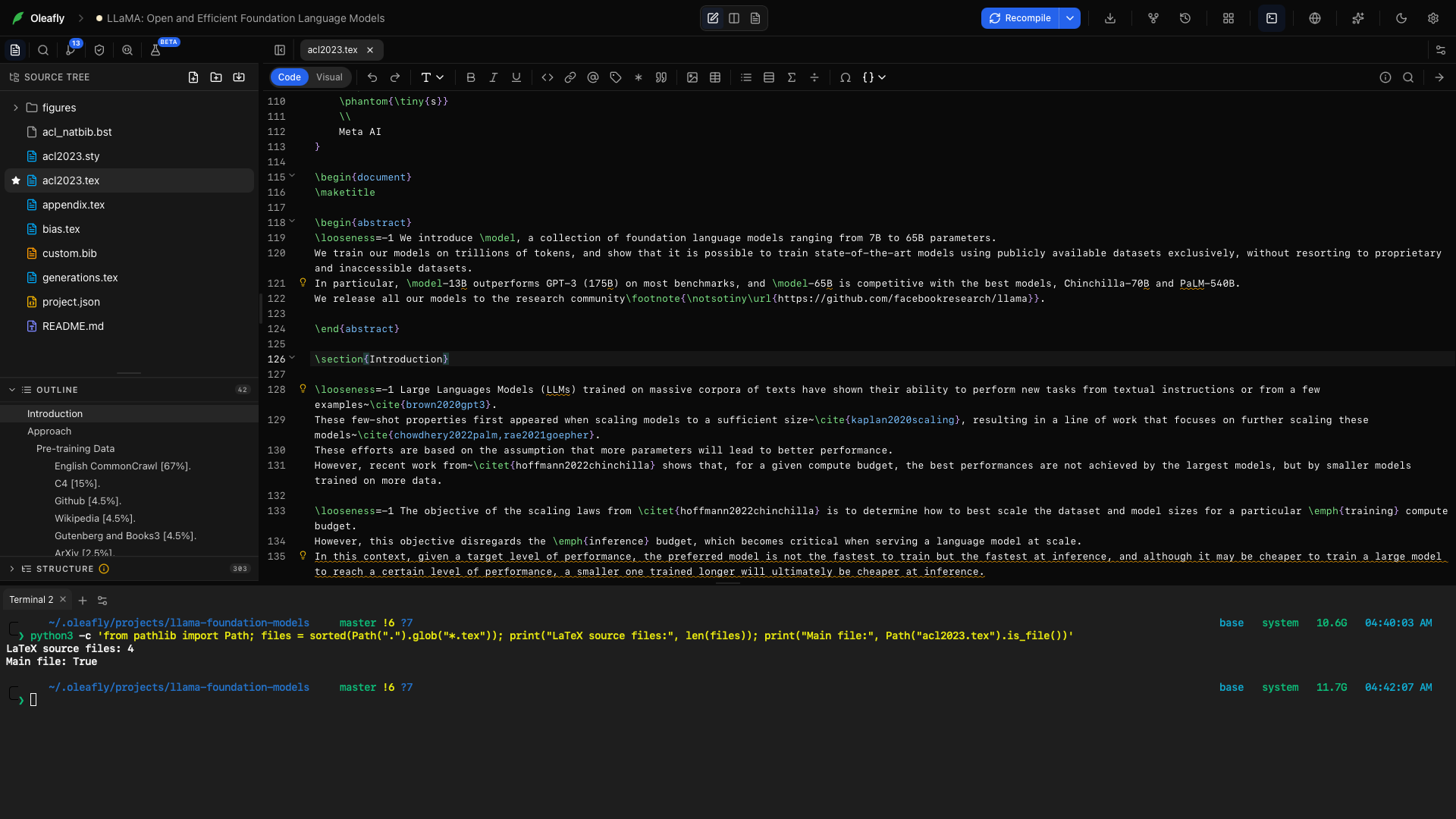
Open Terminal
Section titled “Open Terminal”Choose Terminal from the workspace dock. The terminal opens for the active project. Hiding the terminal lets you return to the editor while the session remains available.
New terminal
Section titled “New terminal”Use New terminal to open another session. Keep a long-running analysis in one tab and use another for inspecting output.
Switch sessions
Section titled “Switch sessions”Select a terminal tab to see its shell and output. A running command belongs to that session, not whichever editor file is selected.
Rename a tab
Section titled “Rename a tab”Open the tab menu and choose the rename action. Use a name such as analysis or figures so the purpose is visible when several sessions are open.
Choose a tab color
Section titled “Choose a tab color”Use the tab’s color menu to distinguish sessions. Choose Default to remove a custom color.
Close the current tab
Section titled “Close the current tab”Use the close action in the tab menu or its close control. Closing the tab ends that terminal session. Hide the terminal panel when you intend to return to an ongoing command.
Close other tabs
Section titled “Close other tabs”Choose Close other tabs to keep the selected session and close the rest. Check for commands you still need before using it.
Close tabs to the left
Section titled “Close tabs to the left”Use this action to close the sessions before the selected tab.
Close tabs to the right
Section titled “Close tabs to the right”Use this action to close the sessions after the selected tab.
Close all tabs
Section titled “Close all tabs”Use Close all tabs to end all terminal sessions in that panel.
Terminal settings
Section titled “Terminal settings”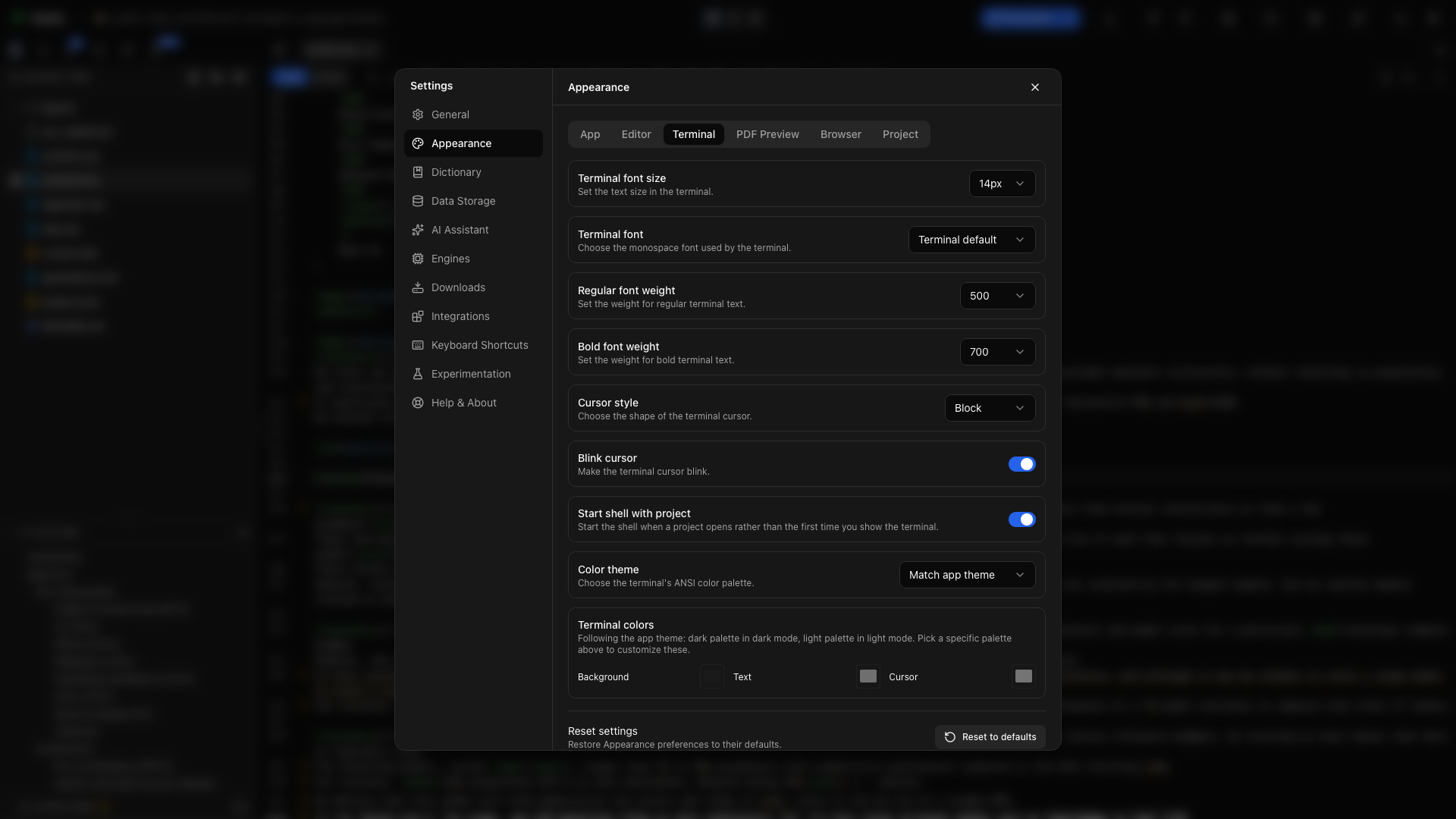
Open Terminal settings to adjust the terminal’s font, size, normal and bold weights, cursor shape, cursor blink, startup behavior, and colors. The Appearance guide describes these controls individually.
Start with a project
Section titled “Start with a project”Enable the terminal startup option in Appearance settings if you want it ready when a project opens. Otherwise, open it from the dock when you need a shell.
Inspect the LLaMA project
Section titled “Inspect the LLaMA project”Open the LLaMA project and its terminal. This command counts the top-level LaTeX source files and checks that acl2023.tex exists. It reads the project without changing it:
python3 -c 'from pathlib import Path; files = sorted(Path(".").glob("*.tex")); print("LaTeX source files:", len(files)); print("Main file:", Path("acl2023.tex").is_file())'The count depends on your copy of the project. Main file: True confirms the entry file is present. On systems where Python is installed as python, use that command instead.
For an analysis script, keep the script and its input data together in the project, run it from this terminal, and insert its output into the paper only after checking the results.